
When preparing your travel kit, you throw two boxes of paracetamol into your suitcase without thinking, and it’s at the Norwegian customs that the question arises. Paracetamol in Norway is subject to stricter regulations than in France, both for local purchase and for transport from abroad. It’s better to know the rules before packing your bag.
Buying paracetamol locally: how Norwegian pharmacies work
In France, you can grab a box of Doliprane at the supermarket without a prescription. In Norway, the situation is quite different. Norwegian health authorities limit the quantities sold per transaction and the size of packaging as part of a national policy aimed at reducing overdoses and medication poisoning.
In practice, you can find paracetamol at pharmacies (apotek) and in some stores, but the available boxes contain fewer tablets than in France. For a hiker heading out for several weeks in the fjords, this means you may need to stop by a pharmacy during your stay, which is not always easy in rural areas where apoteks are scarce.
Before relying on local restocking, you can check Voyagoo’s advice on the quantities allowed for import, a often more reliable option when the itinerary crosses isolated regions.
Allowed quantity and original packaging: the three-month rule
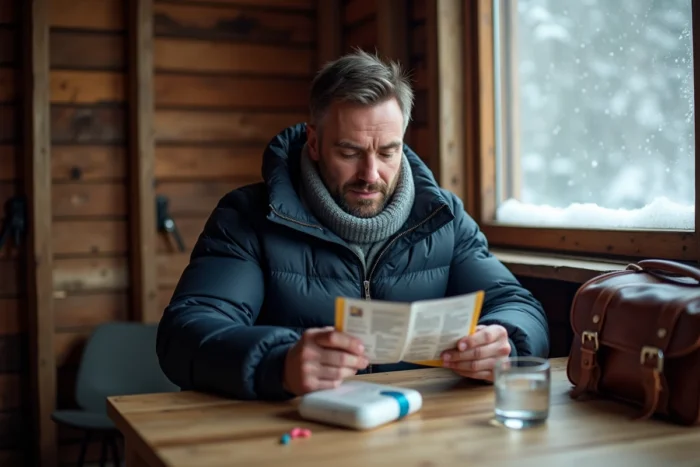
Norway has a clear ceiling for the importation of personal-use medications: three months of treatment at most, in original packaging. For paracetamol, this covers most tourist stays without difficulty. However, if you exceed the volume available for over-the-counter purchase, a prescription becomes mandatory.
Norwegian customs officers regularly check luggage, especially at airports and road border crossings with Sweden or Finland. An open box without identifiable packaging or an unusually high stock can trigger confiscation.
Here are a few reflexes to adopt before departure:
- Keep each box of paracetamol in its original packaging with the leaflet, so that the name of the medication and the dosage are readable
- Carry a copy of the prescription if the quantity transported exceeds what you would normally buy at a pharmacy without a prescription
- Separate medications from the rest of your belongings in your carry-on bag to facilitate any potential checks
Reports vary on the actual frequency of checks, but the regulatory framework exists and applies. It’s better to be prepared than to negotiate at the border.
Paracetamol and other controlled treatments: do not mix the rules
Paracetamol alone does not pose a classification problem: it is not considered a narcotic. The difficulty arises when the travel kit also contains codeine, tramadol, or other controlled substances. In this case, Schengen certification procedures apply in addition.
Norway is part of the Schengen area without being a member of the European Union. For medications classified as narcotics or psychotropic substances, a transport certificate issued by the competent authority of the country of residence is required (the ANSM in France, the AFMPS in Belgium). This certificate covers about a month of treatment and remains valid for around thirty days.

The classic trap: mixing codeine paracetamol (like Dafalgan Codeine) with plain paracetamol and thinking that everything falls under the same regime. Codeine changes the regulatory category of the medication, and the absence of certification can lead to the seizure of the entire first aid kit.
Specific case of Svalbard
Svalbard, a Norwegian archipelago in the Arctic, is not part of the Schengen area. The customs rules there are distinct from those on the continent. If the itinerary includes Longyearbyen or other locations in Svalbard, you need to check the specific entry conditions, which differ from the framework applicable in Oslo or Bergen.
Paracetamol during pregnancy and travel in Norway
Travel forums often ask the question: can you take paracetamol while pregnant during a stay in Norway, especially in light of rumors circulating on social media? The ANSM recently reaffirmed that paracetamol remains the reference analgesic during pregnancy, provided that the lowest effective dose is used for the shortest duration possible.
Meta-analyses have not established a link between in utero exposure to paracetamol and the risks sometimes reported online. From a travel perspective, the constraint is not pharmacological but logistical: healthcare in Norway is of good quality but expensive, and wait times at a family doctor or in emergency rooms can be long. Some regions are not accessible by ambulance, with rescue operations conducted by helicopter or boat.
For a pregnant woman, this implies two precautions:
- Take out travel health insurance covering high medical costs, as without coverage the costs of evacuation are the patient’s responsibility
- Bring a sufficient supply of paracetamol for the stay, since access to a pharmacy may require several hours of driving in remote areas
- Request the European Health Insurance Card before departure, even though Norway is not an EU member, as Schengen agreements allow for partial coverage
Assembling your first aid kit for Norway
Beyond paracetamol, the travel kit for Norway should be considered based on the terrain. Hiking at altitude or ferry crossings expose you to situations where access to a pharmacy can take several hours.
Planning for band-aids, a single-use disinfectant, and an anti-diarrheal covers common incidents. For families with children, pediatric paracetamol in syrup form is harder to find in Norway than in France, and local dosages may differ. Bringing your own supply avoids unpleasant surprises.
Each medication transported must remain identifiable. Norwegian customs officers do not read French, but standardized pharmaceutical packaging with the INN (International Nonproprietary Name) on the box is enough to dispel doubts. A tube of paracetamol loose in a plastic bag, on the other hand, poses problems at every check.