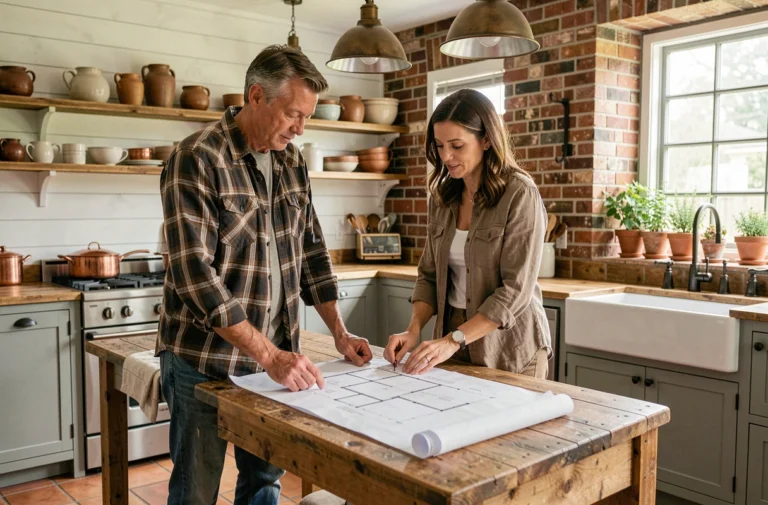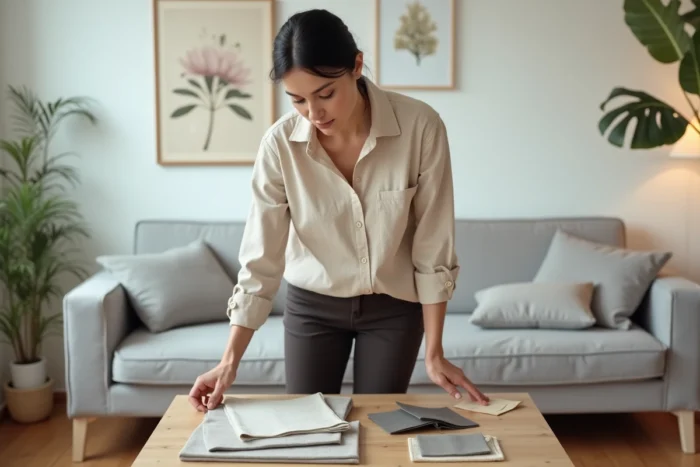
Improving your interior is not just about changing the wall color or replacing a sofa. Behind every design project, technical choices determine the outcome: materials, room layout, coherence between furniture and volumes. Comparing the available approaches allows you to measure what separates a superficial makeover from a lasting transformation.
Natural materials vs synthetic materials: impact on the ambiance of an interior
The choice of materials influences the perception of a space much more than the decorative style. In 2026, the residential trend confirms a decline in gray and plastic finishes in favor of bold hues and natural materials like wood, linen, or stone. This shift directly alters the framework for interpreting a design project.
| Criterion | Natural materials (wood, linen, terracotta) | Synthetic materials (melamine, PVC, resin) |
|---|---|---|
| Visual warmth | High, due to variations in texture and grain | Uniform, sometimes perceived as cold |
| Durability over time | Patinas with use, repairable | Short-term resistance, difficult to restore |
| Regular maintenance | Variable depending on treatment (oil, wax) | Simple, water cleaning |
| Environmental impact | Low if sourced locally and certified | Higher (petrochemical derivatives) |
| Average purchase cost | Higher per unit | Generally lower |
The interior decoration market reflects this shift: the demand for products made from recycled or eco-friendly materials is significantly increasing. A solid wood piece of furniture costs more upfront, but its lifespan and ability to be sanded or refinished change the calculation over ten years.
By browsing C Nouveau’s home solutions, you can find this logic of balancing aesthetics, longevity, and budget applied to all areas of the home.
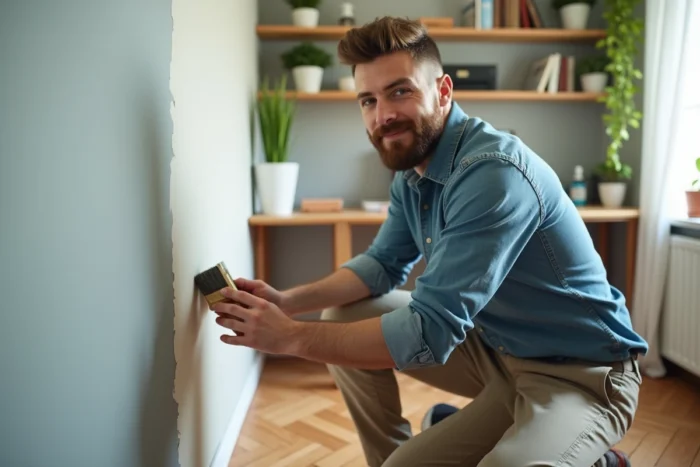
Organic shapes and furniture arrangement: rethinking circulation in each room
Online competitors often detail decluttering or visual coherence. However, they overlook a measurable parameter: the circulation between furniture determines the actual comfort of a room. A twenty-square-meter living room can feel cramped if the sofa blocks the path to the window.
The rise of curved shapes (organic mirrors, rounded sofas, tables with curved edges) is not just a trend. These pieces of furniture facilitate circulation because they eliminate sharp corners. A rounded chair allows movement flow where a rectangular model creates a clear obstacle.
Three indicators to evaluate a layout
- Width of passage between two pieces of furniture: a functional minimum is around 60 to 80 cm for daily circulation, more if a wheelchair needs to pass
- Distance between the main seating area and the screen or coffee table: too close, visual comfort decreases; too far, the space between becomes an unused no man’s land
- Access to natural light sources: no tall furniture should obstruct the light path between the window and the center of the room
Moving just one piece of furniture can transform the perception of an entire living room. Before purchasing anything, testing two or three configurations with existing furniture remains the most cost-effective action.
Colors and lighting: the duo that alters the perception of a space without heavy renovations
Paint and lighting are the two most accessible improvement levers. Their combination produces considerable perception differences at a limited cost.
The decline of gray in favor of warmer, more enveloping hues translates concretely: deep greens, terracottas, and rosy beiges are gaining ground in residential projects. A warm color on a single wall is enough to warm an entire room, provided the lighting follows suit.
Color temperature of bulbs and impact on decoration
A wall painted in terracotta will appear dull under cold white lighting (over 4,000 kelvins). The same wall will come to life under warm light. This discrepancy explains why some paint choices disappoint after application: the color is not at fault; it’s the light source that distorts it.
- For a living room or bedroom, favor a temperature around 2,700 kelvins, which reproduces warm pigments without yellowing whites
- For a kitchen or office, aim for around 3,500 kelvins to maintain accurate color rendering while remaining comfortable
- Multiply low light points (table lamps, wall sconces) rather than relying on a single central ceiling fixture that flattens reliefs and textures
Lighting represents the lowest expense for the highest visual gain in an interior improvement project.
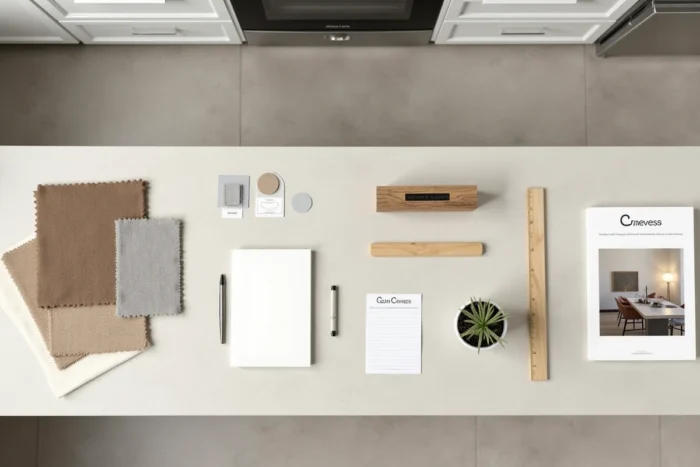
Mandatory take-back of used furniture: an underappreciated lever for renewing your furnishings
The Anti-Waste and Circular Economy Law (AGEC) has mandated since January 1, 2022, the free take-back of used furniture by retailers when a customer purchases an equivalent product. This system remains underutilized even though it simplifies the renewal of furniture.
Specifically, when purchasing a new sofa, the retailer is required to take back the old one at no cost. This obligation covers living room, bedroom, office furniture, and storage elements. The cost of disposal, often a deterrent, disappears from the budget equation.
Combining this free take-back with a coherent design project (choice of sustainable materials, rethought layout, appropriate lighting) allows for transforming an interior without accumulating unnecessary furniture. The regulatory framework aligns with the decor trend: fewer pieces, better chosen, more durable.
An interior improvement project benefits from being approached as a set of measurable parameters (circulation, light, materials) rather than as a series of decorative purchases. The differences in outcome between a thoughtfully designed interior and one arranged by accumulation are noticeable within the first few weeks of use.