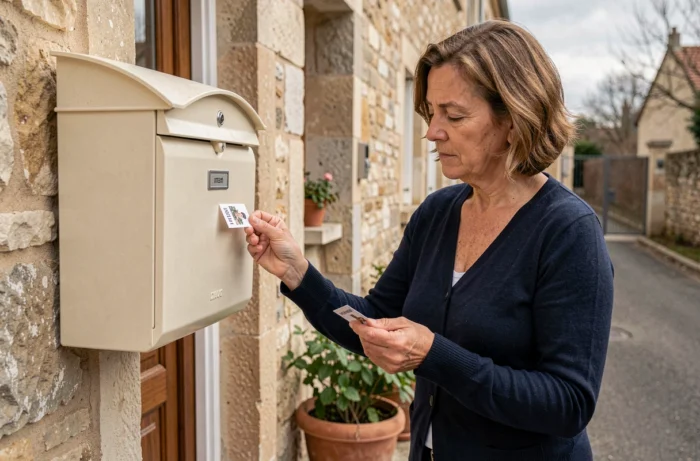
In France, no law prohibits displaying multiple names on the same mailbox. The issue is less about a prohibition and more about a set of practical rules related to mail distribution, leases, and condominium regulations. Understanding these mechanisms helps avoid returned mail or conflicts with a property manager.
Right to Mail and Confidentiality of Correspondence: The Legal Foundation
Before discussing labels or plaques, one principle prevails above all else. A letter addressed to a person belongs to them, regardless of the name displayed on the mailbox. Opening it without permission may constitute a violation of the confidentiality of correspondence, even among members of the same household.
This principle explains why the question of the number of names is legitimate. If two people live at the same address, each has the right to receive their mail reliably. Displaying their name on the mailbox is the most direct way to achieve this, as the mail carrier delivers based on the indications on the nameplate.
No law sets a limit on the number of names that can be displayed. The possibility of having multiple names on a mailbox depends in practice on three factors: the available space on the plaque, the instructions from the landlord or property manager, and the readability for the mail carrier.
Roommates, Partners, and Blended Families: Who Can Add Their Name
Most articles address married couples, where the question rarely arises. More complex situations remain under-documented.
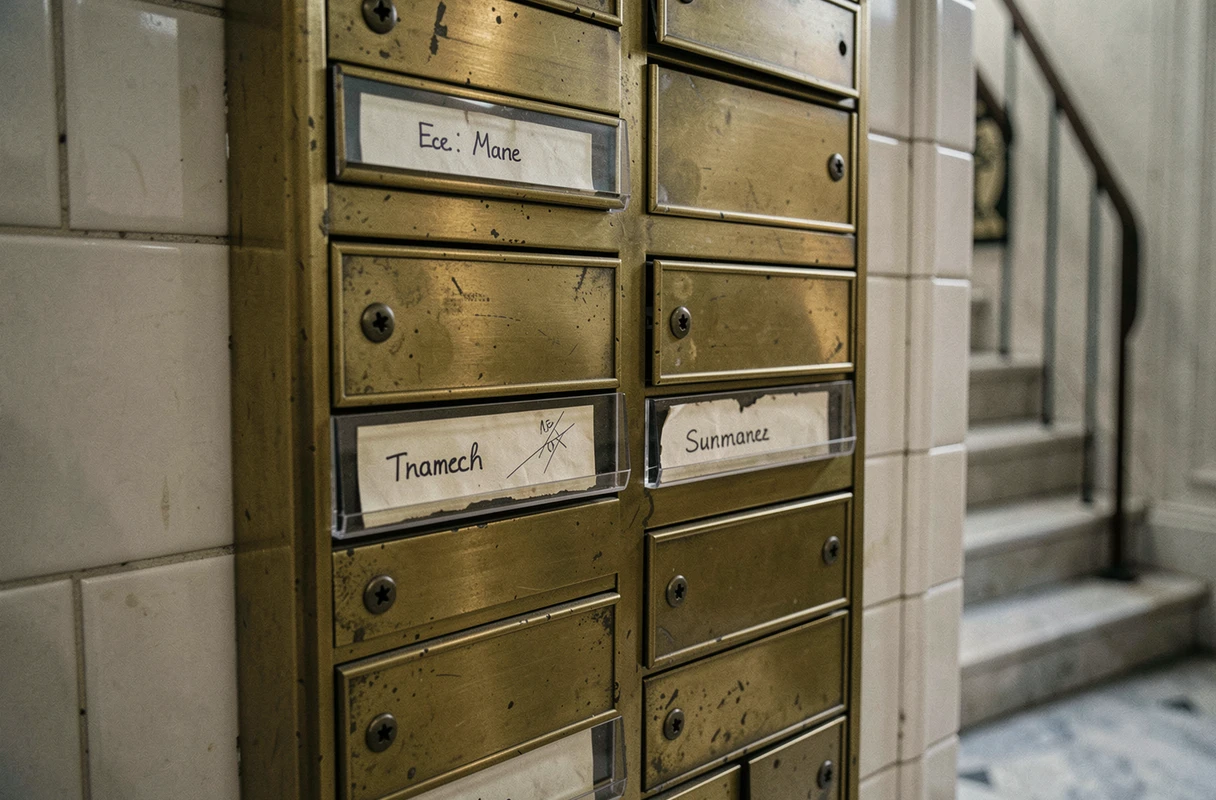
Partners and PACS Partners
A partner whose name is not on the lease can still display their name on the mailbox. No text requires that only the leaseholder be identified on the nameplate. The lease determines who is a tenant, not who receives mail.
In a condominium, the property manager cannot oppose adding a name on the grounds that the person is not a signatory of the lease. The right to receive mail is individual.
Roommates with Individual Leases or Joint Lease
In a shared apartment, each roommate has a direct interest in being listed on the mailbox. When the housing only has one mailbox, all names should be able to appear there. Addressing instructions allow for multiple names on the same line or on separate lines, as long as the distribution remains clear.
Hosted Individuals and Subtenants
A hosted individual can add their name on the mailbox without any particular formalities with the owner. For a subtenant, the situation is the same regarding the display of the name, even if the subletting itself requires the landlord’s agreement.
The common point in all these situations: the person actually resides at the address. Displaying a name without living there can pose problems, especially regarding business domiciliation, which is subject to different rules.
Obligations of the Nameplate in Condominiums and Individual Houses
The regulatory framework varies depending on the type of housing.
- In collective housing built after 1979, the presence of a standardized nameplate on each mailbox is mandatory. The decree of June 29, 1979, imposes installation standards for mailbox blocks, including a readable location for identifying the recipient.
- In individual houses, no similar obligation exists. The owner freely chooses the format, size, and content of their plaque.
- In a condominium, the internal regulations may impose a uniform plaque format (dimensions, color, typography). The property manager then manages the order and installation, but cannot refuse the registration of an actual resident.
When the property manager imposes a standard format, the cost of changing the plaque is generally borne by the resident requesting the modification. This point should be checked in the condominium regulations before any request.
Practical Consequences on Mail and Package Distribution
The mail carrier distributes based on the visible names. An absent or illegible name results in the return of the mail to the sender, including registered mail. This mechanism has concrete consequences:
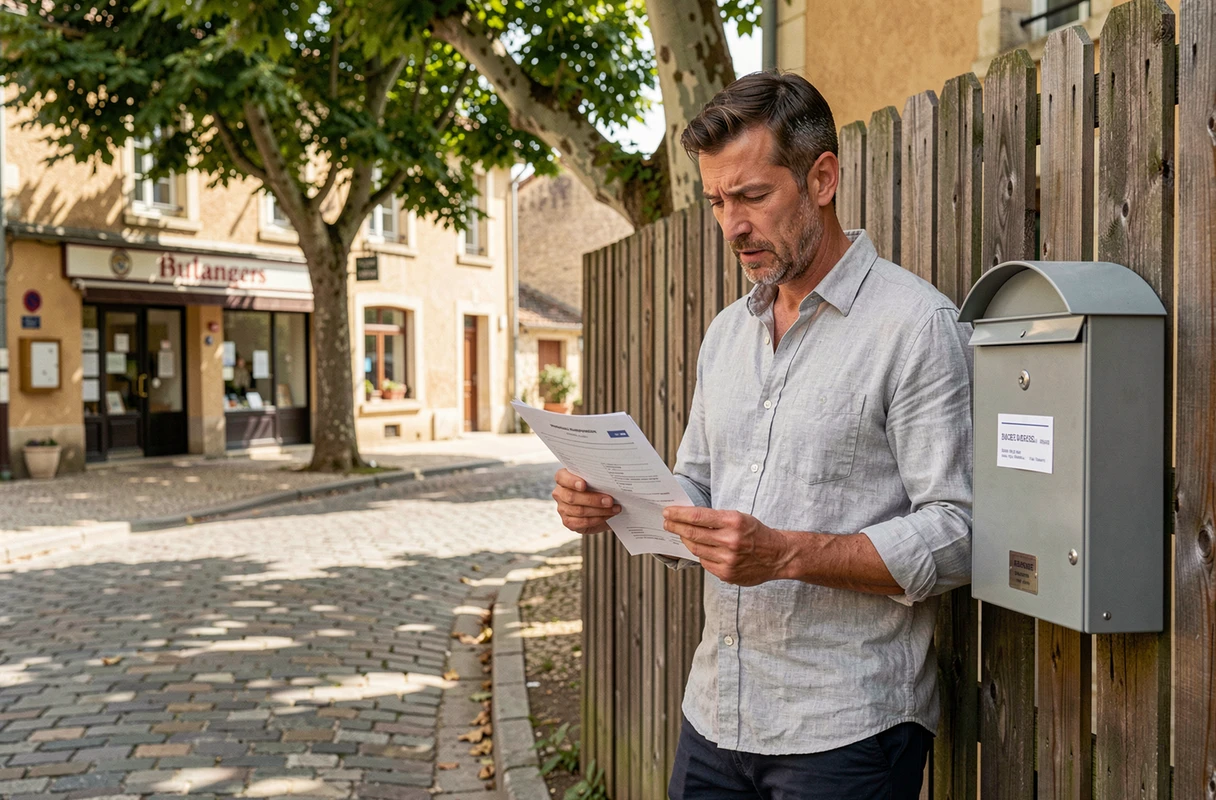
- A registered letter not delivered due to a missing name on the mailbox can lead to exceeding a legal deadline (formal notice, contract termination, summons).
- Packages delivered by private carriers follow a different logic: the delivery person relies on the complete address and apartment number, but a name on the mailbox facilitates leaving a delivery notice.
- For La Poste, the mention “chez” followed by the name of the main holder remains the recommended formula when the recipient is not the leaseholder. Example: “Mr. Dupont chez Ms. Martin”.
This mention “chez” does not replace the display of the name on the mailbox. It complements the address on the envelope, but the mail carrier checks the nameplate first before slipping in the letter.
Readability and Format of the Plaque
With two or three names, readability becomes a real issue. A standard plaque size of 10 x 2.5 cm can accommodate no more than two readable lines. Beyond that, a larger format is required, or the character size must be reduced, complicating the mail carrier’s job.
Favoring the last name alone, without the first name, helps save space. If the mailbox accommodates three residents, a larger plaque or two lines of names remain the most reliable solutions.
Business Domiciliation and Shared Mailbox
Domiciling a business at a personal address follows rules distinct from simply displaying a resident’s name. Multiple businesses can be domiciled at the same address, but this practice involves declarative obligations (registration in the commercial register, domiciliation contract if applicable).
Mixing personal name and business name on the same mailbox remains possible in individual houses. In a condominium, the regulations may restrict the professional use of common areas, including commercial display on the mailbox block. Checking this point before any domiciliation avoids disputes with the property manager.
The question of the number of names on a mailbox is rarely resolved by a single text. It intersects postal law, the lease, condominium regulations, and the physical constraints of the plaque. The mail carrier, however, does not resolve legal subtleties: they read what is written and distribute accordingly.