Fashion galleries no longer function merely as seasonal showcases. This season, they absorb formats borrowed from contemporary art and experiential retail, blurring the lines between exhibition, pop-up, and point of sale. Understanding this shift allows for a different reading of the collections presented in Paris and elsewhere.
Experiential retail in fashion galleries: the pop-up format as a curatorial tool
The most structuring trend this season is not about a color or a cut. It concerns the presentation device itself. Fashion galleries are adopting ephemeral scenographies that borrow their grammar from art exhibitions.
On Boulevard Haussmann, Galeries Lafayette is programming an in-store fashion show lasting about thirty minutes, with mandatory reservations, integrated into the official schedule of Paris Fashion Week. It is no longer a promotional event; it is a curatorial appointment embedded in a journey that mixes fashion shows, exhibitions, design, and crafts.
The most telling case remains the pop-up store dedicated to Nigo’s autumn-winter 2026 collection, accompanied by a market inspired by Japanese konbini, a florist, and a temporary café. This type of hybrid setup transforms the gallery into an immersive space. Clothing is no longer the only object on display; it becomes one element among others in a complete sensory narrative.
We observe that this format forces brands to think of their pieces in context, like artworks in an exhibition. The choice of furniture, lighting, and soundtrack directly influences the perception of the collections. Galleries that neglect this scenographic dimension already seem outdated.
Spring-summer 2026 collections on Parisian runways: dominant silhouettes and materials
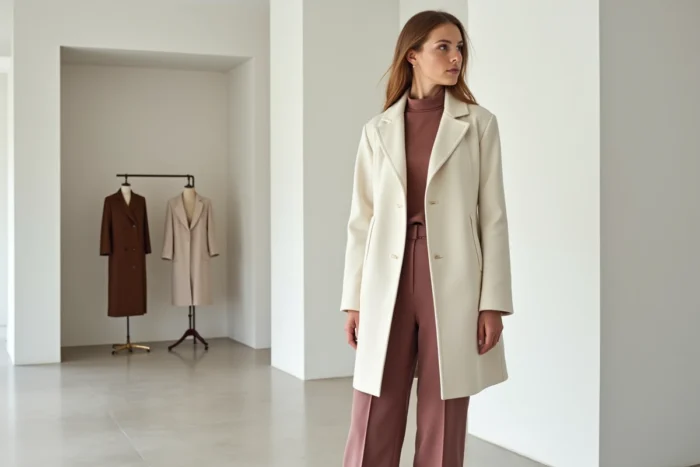
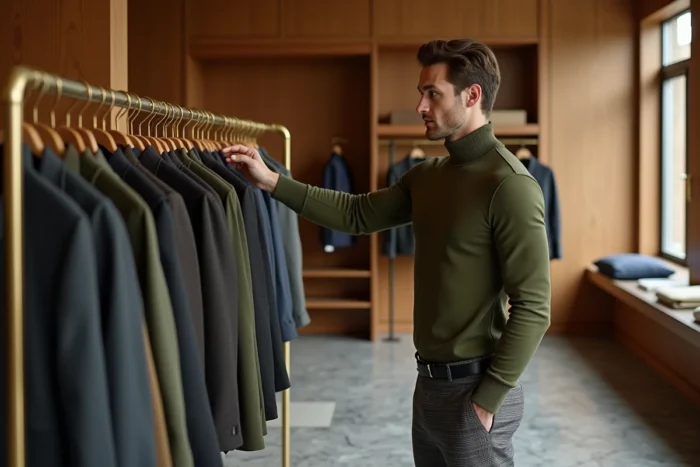
Among the news from Les Galeries de la Mode, several stylistic axes clearly stand out from the collections presented this season. Parisian runways have confirmed a shift towards light, bold, and very colorful silhouettes, far from the minimalism that recently dominated.
Leather remains omnipresent, but in unexpected variations. We find it on summer pieces (short skirts, structured bralettes) and no longer confined to jackets or winter accessories. This migration of leather to warm-weather wardrobes alters technical constraints: tanning must be softer, and linings rethought for ventilation.
Color trends and accessories on the runways
Red emerges as the guiding color of the season, ranging from vermilion to burgundy on full pieces. Accessories follow suit: structured bags in bright shades, oversized jewelry, wide belts worn over fluid silhouettes.
- Colored leather on summer pieces (not just on jackets or boots) marks a technical break from previous seasons.
- Micro-skirts and cuts that expose the legs are making a strong comeback, often paired with ample volumes on the upper body to create a contrast in proportions.
- Accessories no longer merely complete the outfit; they structure it: a statement belt or a sculptural bag can carry the entire silhouette.
What distinguishes this season is the absence of a single trend. The collections play on the layering of contradictory codes: sportswear and tailoring coexist within the same silhouette, and the men’s wardrobe directly feeds into women’s proposals without going through a filter of adaptation.
Art and fashion in Paris: when galleries blend exhibition and collection
Paris Fashion Week is no longer limited to runway shows. Fashion galleries now function as temporary exhibition spaces where artists and artistic directors collaborate on specific installations.
In Hyères, the arts pathway has integrated fashion designers into a program usually reserved for visual arts and design for several editions. This porosity between art and fashion is concretely reflected in Parisian boutiques, where the display of pieces adopts museographic codes: labels, directional lighting, narrative spatial arrangement.
A new role for independent fashion galleries
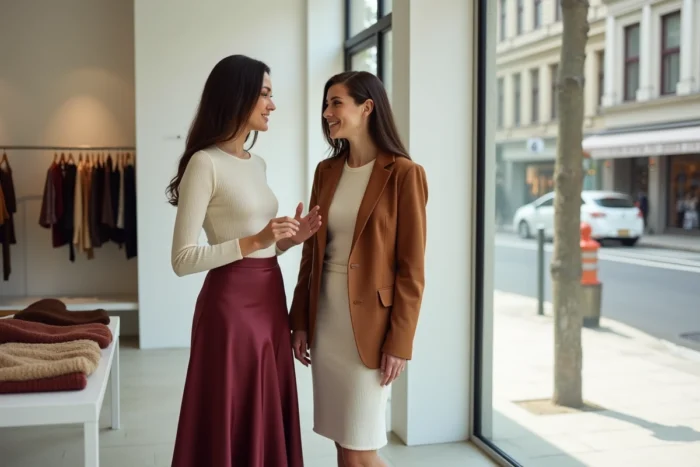
Independent galleries are carving out their niche by offering what department stores cannot: a tight editorial line. While a department store presents dozens of brands, an independent fashion gallery constructs a coherent universe around a few selected designers.
This positioning attracts a clientele seeking a first discovery, a piece that cannot be found elsewhere. The word “gallery” is not a lexical coincidence. It reflects a relationship with clothing similar to that with a work of art: one comes to see before buying, returning to follow the story of an artist or a brand.
Fashion Week and new collections: what the season reveals about the fashion calendar
The traditional tempo (spring-summer presented in September, autumn-winter in February) is fragmenting. Pop-up stores and gallery presentations allow brands to showcase their pieces outside the official calendar, sometimes several months after the runway shows, when the collections actually arrive in stores.
This desynchronization has a direct effect on the style of presentations. Fashion galleries that schedule events in June or July showcase autumn-winter collections in a summer context, which necessitates rethinking the scenography. Warm clothing must convince under summer light.
- In-store fashion shows, like that of Galeries Lafayette, align their programming with Fashion Week to capture the flow of international visitors.
- Pop-up stores operate on short windows (a few days to two weeks), creating a sense of urgency that boosts attendance.
- Independent galleries often choose to delay their presentations to avoid the media saturation of Fashion Week.
This calendar shift also alters the work of professional buyers, who must multiply gallery visits throughout the year instead of concentrating their scouting on two weeks of runway shows.
The current season confirms that the fashion gallery has become a format in its own right, distinct from the showroom and the traditional store. Collections are no longer viewed the same way when staged as exhibitions, in spaces designed to slow down the gaze. Brands that understand this are already building their next presentations around this logic.