
If you want to grow your own vegetables, you spot a community garden near your home, and you think that filling out a form will be enough. In most municipalities, the reality is rougher: the request for a family garden opens a file, not a plot. Understanding the local mechanics before applying helps avoid losing an entire season on a poorly targeted waiting list.
Family garden and collective management: the framework that the town hall doesn’t always detail
A family garden is not just a simple plot made available. In many cities, the plot is linked to a municipal or associative system that imposes usage rules, maintenance of common areas, and sometimes an annual fee to a managing association. Accepting a plot means committing to a collective operation with concrete obligations.
In Annecy, for example, family gardens managed by associations require direct contact with the association office of the targeted site. In Montpellier, the system is classified under biodiversity, which also guides the allowed practices (pesticides often prohibited, water management regulated). Even before filling out anything, you save time by identifying who actually manages the plots in your municipality: the town hall, a gardeners’ union, or a local association.
To apply for a family garden, you first need to check if the process goes through an online municipal form or a letter to the association. Both exist, sometimes in the same city depending on the site.
Waiting list and priority criteria: anticipating the actual delay
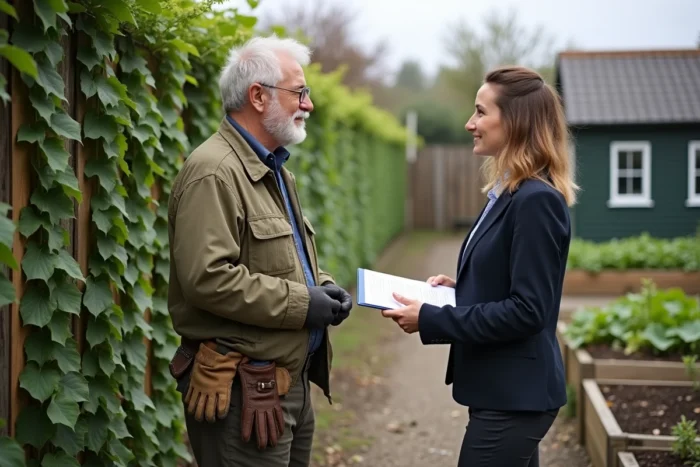
The point that many candidates discover too late: registration opens a place on a waiting list, not immediate access. The waiting time varies greatly depending on local land pressure. In large urban areas, it can last several gardening seasons.
Priority criteria differ from one municipality to another. Strasbourg specifies that a household can only claim one garden, and that individuals already having a plot (house with garden, agricultural or leisure land) are excluded from the system. This type of filter exists in several cities, even if it is not always clearly displayed on the registration page.
What can speed up or slow down the allocation
- The requested location: a very central site with few plots generates a longer wait than a plot on the outskirts with frequent rotations
- The composition of the household: some municipalities prioritize large families or individuals without private outdoor space
- The timing of registration: waves of departures (end of lease, relocations) often concentrate at the beginning of the calendar year, and allocations follow suit
Requesting multiple sites in the same municipality, when possible, increases the chances of obtaining a plot more quickly. Feedback varies on this point according to local policies, but expanding your geographical scope remains the most effective lever.
Application file: required documents and common pitfalls
The form itself is rarely complicated. Most municipalities request an identification document, a recent proof of residence, and sometimes a sworn statement confirming that you do not own private land. Some associations add a written commitment to adhere to the site’s internal regulations.
The most common pitfall is not administrative; it is forgetting to follow up on your application. In several municipal systems, a file without an annual update may be considered abandoned and removed from the waiting list. Checking at the beginning of each year that your registration is still active helps avoid starting from scratch.
Commonly requested documents
- Copy of the identification document of the adult applicant
- Proof of residence less than three months old in the relevant municipality
- Sworn statement of non-possession of private land (depending on the cities)
- Membership or pre-membership in the managing association of the targeted site
Lease and obligations of the family garden tenant
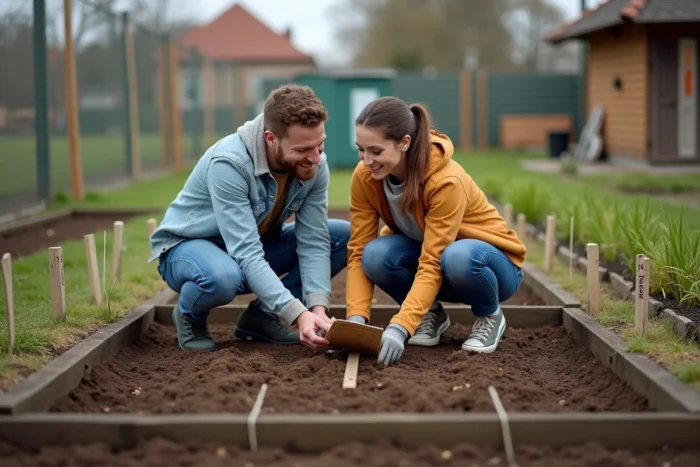
Once the plot is allocated, a rental contract or specific lease is signed. This document sets the duration of occupation, the amount of the fee, and the rules of use. The lease can be terminated if the plot is not maintained or if the internal regulations are not respected.
The concrete obligations generally involve regular maintenance of the land (weeding, absence of illegal dumping), adherence to presence hours in certain sites, and participation in collective work such as maintaining paths or the shared irrigation system. Not attending collective days may, in some associations, lead to a warning.
The use of the plot is strictly personal and non-commercial. You grow for your consumption, not to sell at the market. Some regulations also prohibit permanent constructions, limiting shelters to small cabins of prescribed dimensions.
Urban agriculture and biodiversity: an evolving framework
Family gardens are no longer presented as a simple leisure activity by local authorities. Several cities now integrate them into their biodiversity and urban agriculture policies. This repositioning has practical consequences: maintenance charters evolve towards more ecological practices, with restrictions on pesticides and reasoned water management.
For gardeners, this means that the application file may include a commitment to cultivate without synthetic pesticides or to participate in collective composting workshops. This is not a hindrance, but it is an element to be aware of before registering to avoid surprises once the plot is in hand.
Obtaining a family garden mainly requires method and patience. Identifying the right contact (town hall or association), submitting a complete file, and then following up on your application each year are the three actions that make the difference. The rest is soil, time, and a few seeds.