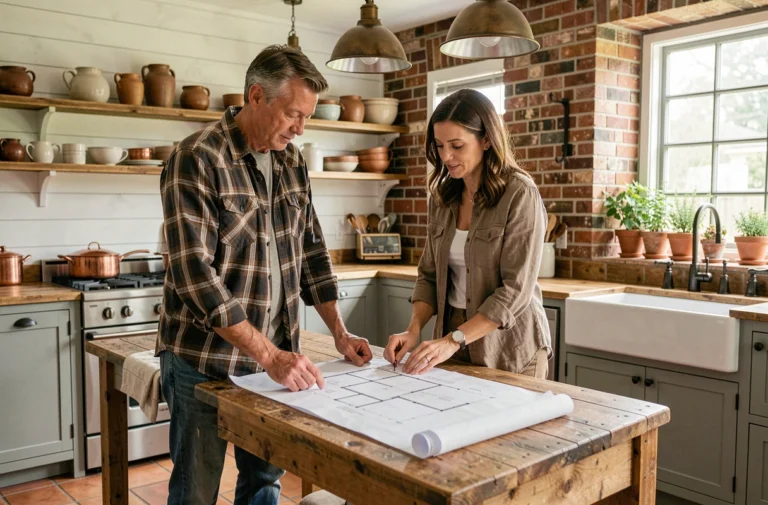
A sofa that is too large blocking the passage to the terrace, a light fixture that dazzles instead of illuminating, a wall color chosen on screen that turns grayish once applied: most decor mistakes stem from a mismatch between what we imagine and what the space demands. Decorating and furnishing your home with style in 2026 starts with a careful reading of the constraints of each room before choosing a piece of furniture or a color.
Textures and natural materials: the real decor lever in 2026
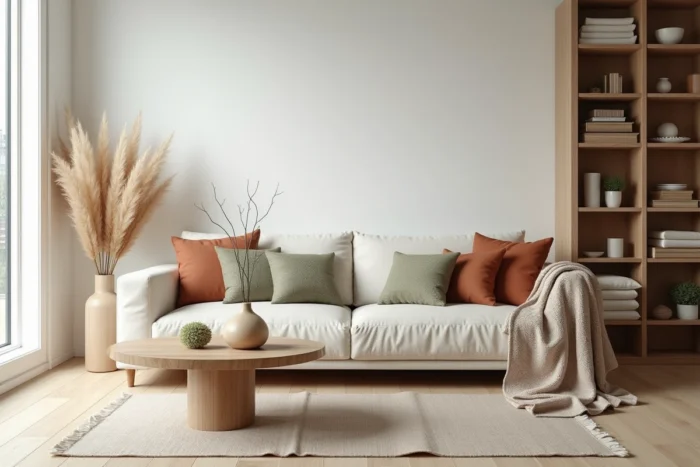
There is a lot of talk about colors, but rarely about what happens under our fingers. This year’s strong trend is based on plays of textures rather than palettes. A wall with lime plaster, a thick wool throw on a rattan chair, a terracotta tray placed on a raw wood table: it is the layering of authentic materials that gives depth to a room.
Specifically, we favor textured wood (brushed oak, burnt pine), natural fibers (jute, linen, sisal), and artisanal ceramics. These materials age better than laminate or plastic and withstand the wear and tear of daily life, especially in a living room or an entryway that sees a lot of traffic.
Decor professionals emphasize warmer and more soothing atmospheres, with soft shapes replacing the sharp angles of industrial style. On the Habitat Expo home page, you can find concrete examples of this approach that combines tactile comfort and organic lines.
Creating a functional living room without sacrificing style
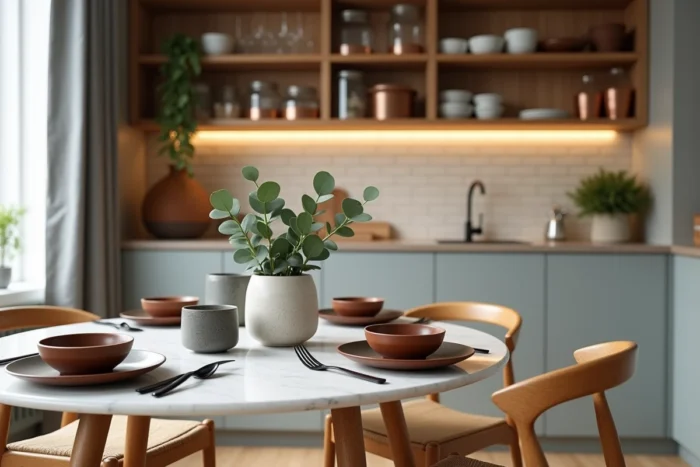
The living room remains the space where layout mistakes cost the most. Before buying anything, measure the circulation. A minimum passage of 80 cm between the sofa and the coffee table, sufficient clearance in front of the doors: the comfort of a living room is primarily determined by the floor plan.
Position the sofa according to the light
The classic mistake is to push the sofa against the longest wall. If this wall faces the window, you end up dazzled during the day and in shadow at night. It is better to position the seating perpendicular to the source of natural light, even if it means leaving a space of 20 cm behind the backrest.
This arrangement also frees up a passage behind the sofa, which is practical in open living spaces connected to the kitchen. Feedback on this point varies depending on the layout, but in most cases, a sofa pulled away from the wall visually enlarges the space.
Multiplying light sources
A central ceiling light is never enough. For a pleasant living room, combine at least three types of lighting:
- An indirect ambient light (floor lamp directed towards the ceiling, understated string lights) for quiet evenings
- A functional light (reading lamp, adjustable spotlight) near the sofa or workspace
- A decorative light point (candle, ceramic table lamp) on an accent piece to warm the atmosphere
This principle also works in the bedroom and dining room. Three well-placed light sources transform a room more than a new piece of furniture.
Sustainable decoration: buy less but better
The logic of responsible Japandi is becoming established in interiors in 2026. The principle is simple: reduce the number of objects to keep only those that have a real function or aesthetic value. Instead of accumulating cushions and frames, choose a standout piece per area (a stoneware vase in the entryway, an antique mirror above the fireplace).
Turning to second-hand items becomes a decor reflex, not just an ecological gesture. You can find solid wood furniture at flea markets and resale platforms for a fraction of the price of new, with a patina that no industrial treatment can replicate.
French manufacturers and short supply chains
Prioritizing French manufacturers is not just a commitment; it is also a practical choice. A locally produced piece of furniture is easier to repair, spare parts are available, and delivery times are often shorter. For ceramics, textiles, and small furniture, several workshops now offer direct sales, allowing you to check the quality before purchase.
Soothing colors: how to choose a palette that lasts
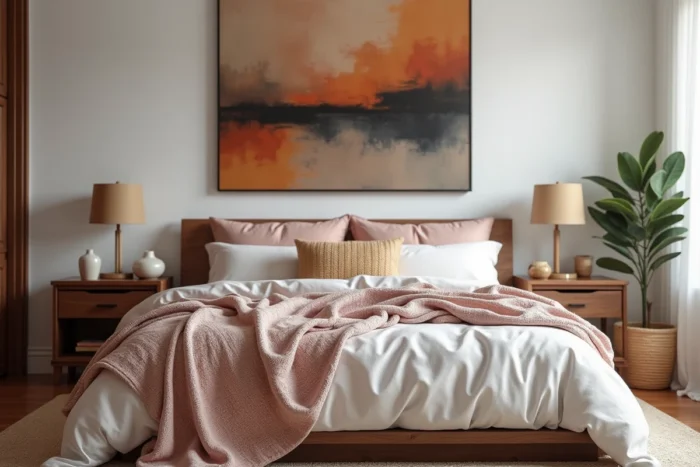
Neutral and warm shades dominate: muted terracotta, rosy beige, sage green, off-white. These colors work in almost all lighting conditions, avoiding unpleasant surprises after application.
Before painting an entire wall, test the color on a surface of at least 50 cm x 50 cm, ideally next to the window and in a dark corner. A color changes radically between the natural morning light and the artificial evening lighting. Observing the sample for two full days is enough to validate or eliminate a choice.
- For a north-facing living room, avoid cool grays and favor warm beiges or soft terracotta
- In a very bright room, a sage green or gray-blue absorbs excess brightness without darkening
- Strong colors (navy blue, forest green) work better on a single wall than throughout the entire room
Combining colors and materials
A wall color does not live in isolation. A terracotta wall makes sense with a natural linen sofa and a jute rug. Conversely, the same wall with a black leather sofa and a chrome metal table will create an unpleasant contrast. Match the wall palette to the materials already present, not to a photo found online in a different lighting context.
A common pitfall is choosing furniture and walls separately, only to find that nothing harmonizes. Save time by placing a fabric sample, a piece of wood, and the color card side by side before making any purchasing decisions.
Decorating your home with style does not require a huge budget or interior design skills. The most successful interiors share a common point: every element has been chosen based on the actual space, not an abstract trend. Good lighting, coherent materials, and a palette tested on-site do more than an entire catalog of designer furniture.