Water resilience, miniature vegetable gardens, permeable soils: the garden trends of 2026 are no longer measured solely by the aesthetics of a flowerbed or the choice of a dominant color. They reflect a shift towards outdoor spaces designed to absorb climate shocks, nourish, conserve water, and support the mental health of those who cultivate them. What criteria allow us to distinguish a true structural trend from a mere decorative fad?
Garden Trends 2026: Four Resilience Axes Compared
Several professional sources converge on four pillars that are redefining outdoor landscaping this season. The table below summarizes their characteristics and maturity level.
| Resilience Axis | Key Practice | Main Benefit | Adoption |
|---|---|---|---|
| Water | Permeable garden, xeriscaping | Reduction of runoff and water consumption | Significantly increasing since summer restrictions |
| Food | Snack garden (productive micro-garden) | Quick harvest, reduced maintenance | Gradually replacing the traditional large vegetable garden |
| Mental | Planting seasonal micro-joys | Simple rituals, bright colors all year round | Still a less developed angle in garden media |
| Zero Waste | Municipal challenges, collective composting | Reduction of green waste, circular economy | Local institutionalization (calls for applications) |
What stands out is that the four axes respond to real constraints (drought, food inflation, mental overload, waste regulations) rather than decorative desires. Outdoor furniture catalogs and color palettes are still present, but they are now grafted onto these fundamentals.
The news from the Ambiance Jardin site reflects this shift towards outdoor spaces designed to last beyond a season.
Permeable Garden and Xeriscaping: Water Management Redesigns Soils
The idea of collecting rainwater is not new. However, the concept of permeable garden goes much further: it involves rethinking the entire ground surface so that it absorbs water where it falls, instead of channeling it towards a saturated network.
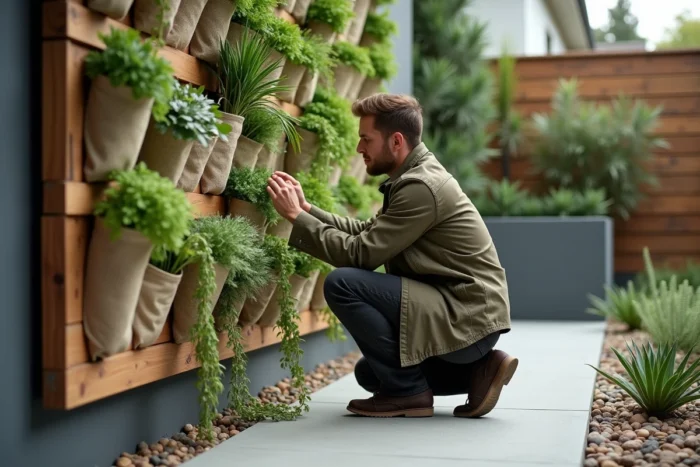
In practical terms, this means replacing impermeable slabs with draining surfaces, integrating vegetated swales, and choosing plants capable of thriving in soil that alternates between saturation and drought. This approach is directly linked to new municipal guidelines on urban runoff.
Xeriscaping: Gardening Without Watering
Xeriscaping takes the logic even further by creating flowerbeds that require almost no watering once established. Mediterranean perennials (lavenders, yarrow, ornamental grasses) and drought-resistant plants like echinacea replace water-hungry hydrangeas and daily-watered geraniums.
Drought-resistant plants become the foundation of landscaping, not just a default choice. Specialized nurseries report a clear shift in demand towards these varieties over several consecutive seasons.
Snack Garden and Resilient Vegetable Garden: Producing More on Less Surface
The traditional large vegetable garden, which requires hours of weeding and watering each week, is losing ground. The trend for 2026 is leaning towards what some call the “snack garden”: a productive micro-space, often elevated, focused on short-cycle crops.
- Cherry tomatoes, radishes, cut-and-come-again lettuces, herbs: varieties that produce in a few weeks and can be harvested as needed
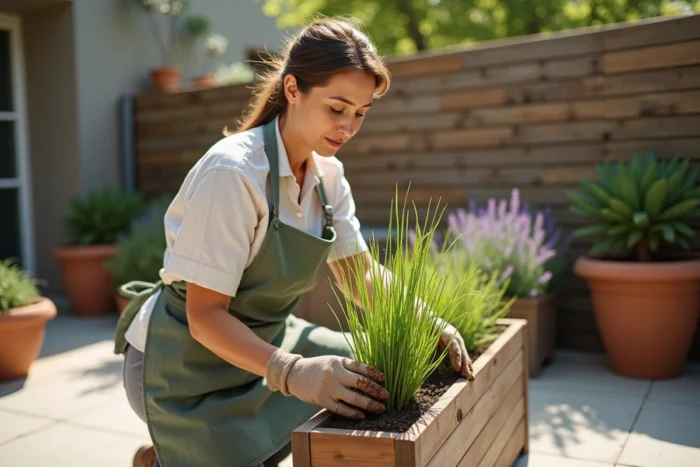
- Raised beds made of wood or recycled metal, accessible without bending down, with better drainage and fewer pests
- Simplified rotation logic: three or four species maximum per bed, replaced as soon as a harvest is finished
This evolution of the vegetable garden responds to a dual constraint. On one hand, the available time for gardening is decreasing. On the other hand, the desire to produce part of one’s food is strengthening, driven by inflation on fresh fruits and vegetables.
The resilient vegetable garden does not aim for self-sufficiency. It aims for regularity: a few handfuls of greens each week, without the garden becoming a chore.
Mental Well-being in the Garden: Planting Micro-Joys Instead of Projects
The psychological well-being angle of gardening is rarely developed in trend overviews, which remain focused on plants or decorative styles. However, specialized sources for 2026 are explicit: the garden is conceived as a space for psychological resilience.
The principle is based on simple rituals rather than large landscaping projects. Planting a bulb, pruning an herb, observing a bloom: these short and repetitive actions generate measurable calm, provided the garden does not become an additional source of stress.
Bright Colors and Staggered Blooming
The 2026 plant palette favors bright and warm colors, capable of producing an immediate visual effect. Plantings are designed to offer staggered blooming, so there is always something to look at, even in the off-season.
This approach contrasts with the “project” garden (complete overhaul, large budget, visible results in two years) in favor of the “ritual” garden (small daily gesture, immediate satisfaction, maintenance calibrated to the actual available time).
Zero Waste Gardening: When Municipalities Structure the Trend
Home composting has existed for a long time. What changes in 2026 is the institutionalization of the approach. Several French municipalities are launching “zero waste garden” challenges with calls for applications and technical support for residents.
- Provision of composters, training in shredding green waste, monitoring over several months
- Objective: reduce the volumes of green waste collected by municipal services, which represent a significant portion of treated tonnages
- Secondary effect: participants discover mulching, organic fertilization, and other practices that improve soil health
These local initiatives reflect a shift from voluntary individual actions to a structured collective framework by local authorities. Circular gardening is no longer reserved for environmental activists; it is entering public waste management policies.
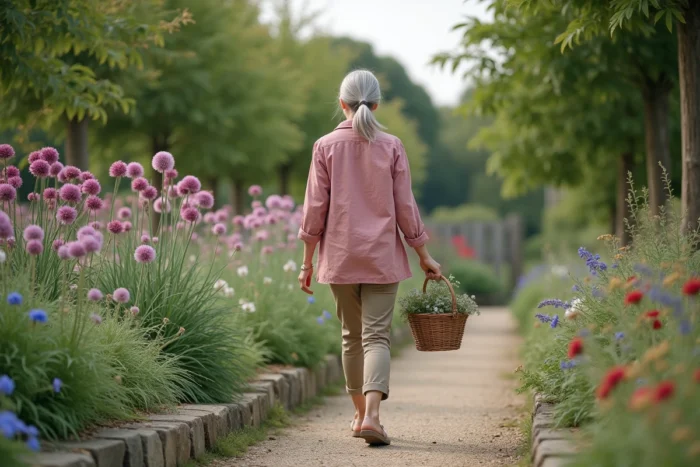
The garden trends of 2026 share a common point: they respond to tangible constraints rather than fleeting aesthetic desires. A permeable soil protects against runoff. A snack garden produces without exhausting. A planting ritual supports morale. A zero waste challenge reduces municipal tonnages. The decorative garden has not disappeared, but it is now built on these utilitarian foundations.