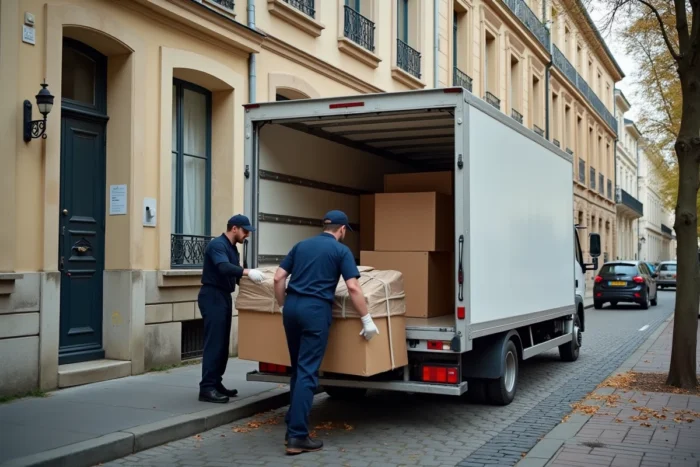
A 10 m3 truck refers to a utility van whose cargo space offers an interior volume of approximately ten cubic meters. This capacity corresponds to a box about 3 meters long, 1.75 meters wide, and 1.80 meters high. Drivable with a standard B license, this size is situated between the small 6 m3 van and the large 12 m3 utility vehicle, making it a versatile format for transporting bulky goods.
Payload and weight constraints of a 10 m3 truck
Volume alone is not enough to determine what a van can carry. The payload, which refers to the maximum mass of goods allowed once the weight of the empty vehicle is deducted from the GVW (gross vehicle weight), remains the limiting factor. On a 10 m3 truck, it generally hovers around 1,400 to 1,500 kg depending on the model.
In practice, the volume often fills up before reaching the weight limit, unless the load contains dense items: books stacked in boxes, metal tools, stock of tiles. In these cases, monitoring the payload helps avoid driving overloaded, which exposes one to a fine and, more seriously, degrades the vehicle’s braking.
To know precisely what a 10 m3 truck carries based on your situation, you need to cross-reference the available volume and the actual weight of your goods. A typical move of furniture and clothing boxes remains well below the weight limit, while transporting construction materials can reach it with a half-full box.
Apartment move: what fits in 10 m3
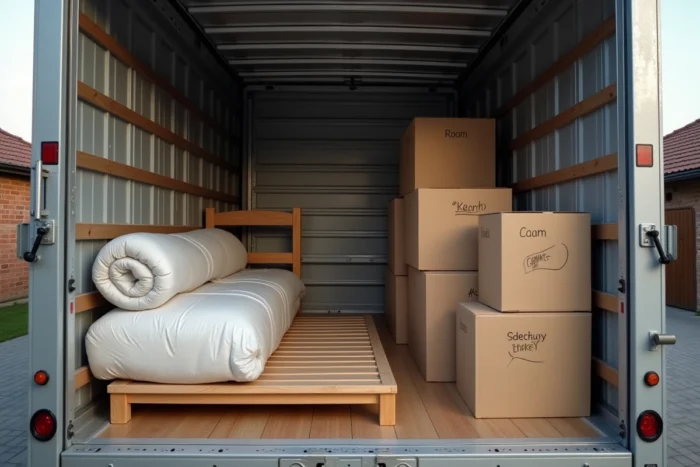
A 10 m3 truck can hold the contents of a small apartment, typically a studio or a furnished one-bedroom. The common reference given by rental companies corresponds to a dwelling of 20 to 30 m2 including a double bed, a refrigerator, a washing machine, a two-seater sofa, and a television, plus about twenty boxes.
Beyond 30 m2 of living space, a single trip is generally no longer sufficient. A furnished three-room apartment exceeds the available volume, especially if the furniture includes a wardrobe, a bookshelf, or a large desk. Two options then arise: plan for two round trips if the distance allows, or switch to a larger size (12 m3 or more).
Optimizing loading space
Space savings depend as much on the loading method as on the gross volume. Placing heavy and flat furniture (bed base, disassembled table, shelves) against the walls of the box, then filling the gaps with boxes, allows for significant volume recovery.
- Dismantling furniture with screwed legs (table, bed, desk) reduces their bulk by about half
- Stacking the heaviest boxes at the bottom and the lighter ones on top stabilizes the load during transport
- Using blankets or textile covers instead of bulky bubble wrap to protect fragile items without wasting space
Transporting furniture and bulky items outside of moving
The 10 m3 is not only for moving. It is the most suitable format for transporting one or two bulky second-hand furniture pieces, picking up a large appliance, or delivering equipment to a construction site.
The interior height of about 1.80 m accommodates most wardrobes as long as they are loaded upright. An American refrigerator, however, may pose width issues depending on the model. Checking the exact interior dimensions of the van offered by the rental company remains the most reliable reflex before booking.
For craftsmen, this size easily transports wooden panels, drywall sheets, or metal profiles up to three meters long. The sliding side door, present on most models (Renault Master, Fiat Ducato, or equivalents), facilitates loading long pieces without having to go through the back.
2026 Regulation: tachograph and light utility vehicles
A European regulatory change directly affects certain uses of the 10 m3 truck. Starting July 1, 2026, light utility vehicles with a GVW exceeding 2.5 tons, used for international transport of goods or commercial cabotage, will need to be equipped with a second-generation smart tachograph. Their drivers will be subject to the same driving and rest time rules as heavy truck drivers.
The majority of 10 m3 trucks have a GVW between 3 and 3.5 tons, placing them within the scope of this obligation. However, a craftsman exemption exempts drivers transporting their own tools or materials within a limited radius around their establishment, with a vehicle not exceeding 7.5 tons.
Who is affected in practice
An individual renting a 10 m3 for their move is not affected by this measure. A craftsman transporting their own equipment locally is also exempt due to the exemption. The rule targets light transport companies making cross-border commercial deliveries or cabotage.
- Personal move: no tachograph obligation, regardless of the GVW of the rented vehicle
- Craftsman working independently within a local radius: exempted by the craftsman exemption
- International commercial delivery with a utility vehicle over 2.5 t GVW: tachograph required starting July 2026
This distinction between private and commercial use remains the determining criterion. For a move or a one-time transport of furniture, the 10 m3 truck remains accessible without additional formalities, with just a B license and the standard rental documents.