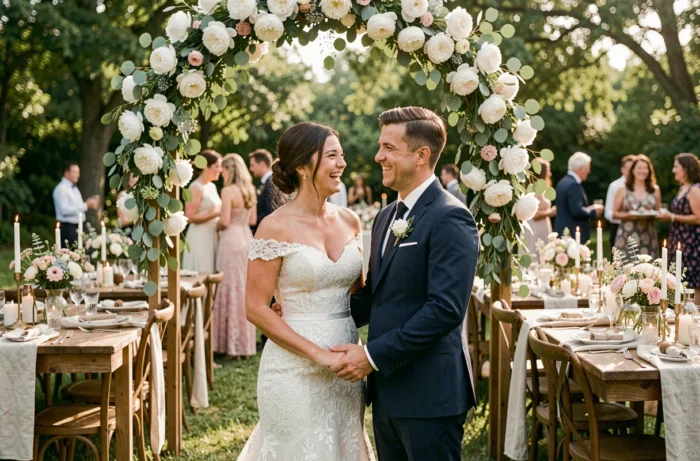
A couple getting married in a converted old train station does not experience the same day as one who books a classic castle. The location, the pace, the details that surprise the guests: it all starts from concrete choices made early on, often against the grain of inspiration catalogs. Organizing a unique wedding requires fewer Pinterest ideas and more decisive decisions about what truly matters to both of you.
Personalized ceremony: building a narrative thread rather than a decorative theme
Many weddings are still organized around a visual theme (bohemian, rustic, industrial). The problem is that the theme quickly runs out of steam: once the color palette is chosen and the centerpieces are set, all that remains is decor. The trend that has emerged in recent years is moving in a different direction.
The ceremony gains coherence when it tells the couple’s story rather than just being a mood board. Specifically, it starts from a shared memory, a foundational trip, a common passion, and derives a guiding thread that runs through every moment of the day: the texts read during the civil ceremony, the musical choices, the menu, the gifts for the guests.
This narrative approach creates an atmosphere that guests feel without being able to name it. It also provides a useful decision-making framework for choosing between two vendors or two decoration options. If you want to learn more about Mariage Unique, this is precisely the type of custom reception that is documented there.
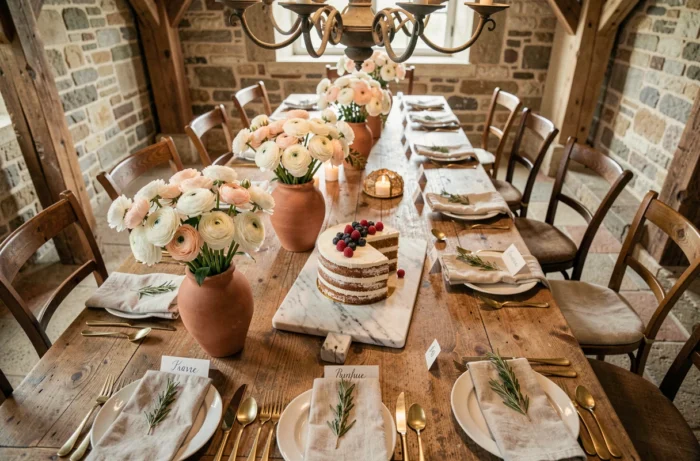
Unusual reception venue: constraints to check before signing
Choosing an original venue for your wedding (farm, warehouse, private garden, barge) radically changes the experience. However, an atypical venue comes with constraints that classic spaces have already addressed.
Points to validate on-site
- Electrical supply: an agricultural area or warehouse does not always have the necessary power for a DJ, stage lighting, and a caterer simultaneously. Planning for a generator is a budget item to estimate early.
- Sanitary accessibility: number of available toilets, water connection, mobile solutions if the venue is isolated. Feedback on this point varies by region, but it is often the first irritant reported by guests.
- Administrative permits: a wedding in a venue not intended for events may require procedures with the town hall (noise, parking, fire safety). Check several months in advance.
- The weather backup plan: a garden without a covered fallback solution remains a gamble. Planning a reception tent or an adjacent room avoids panic on the big day.
A spectacular venue poorly prepared produces more stress than memories. A technical visit with the caterer and sound/light provider is recommended before signing any contract.
Multi-day wedding: budget and logistics for a full weekend
The rising trend is the wedding spread over an entire weekend. Welcome dinner on Friday night, ceremony and reception on Saturday, brunch on Sunday morning. This is no longer reserved for large budgets, provided you make some trade-offs.
The Friday dinner can be simple: wood-fired pizza, plancha, potluck where each family brings a dish. The goal is not to double the wedding meal but to create a relaxed moment where both circles of guests meet before the main day.
The Sunday brunch operates on the same principle. Pastries, fruits, coffee available at the reception venue, while the couple opens gifts or shares a final moment with close ones who stayed overnight.
What it changes for the budget
The accommodation cost increases mechanically. If the venue has rooms or nearby cottages, the extra cost remains reasonable. If guests need to book a hotel, negotiating a group rate in advance lightens the bill for everyone.
On the other hand, this format reduces pressure on Saturday. There is less need for spectacular entertainment to “fill” the evening since guests have already spent time together the night before. The day flows more smoothly.
Wedding entertainment and guest experience: what truly makes an impact
The most memorable entertainment is not the most expensive. It relies on a simple principle: involve the guests instead of making them watch.
A cocktail workshop where everyone mixes their drink works better than a bartender show. A photobooth with homemade props related to the couple’s story leaves a stronger impression than a generic photo booth. A quiz about the couple, read by the best man, creates laughter and camaraderie without any special equipment.
For the ceremony itself, personalizing the vows remains the most emotionally powerful element. You can also incorporate a symbolic ritual (planting a tree together, sealing a box to open on a wedding anniversary) that gives the day a concrete anchor in time.
Eco-friendly wedding: choices that have a real impact
Rather than labeling everything “green,” it’s better to target areas where the impact is real. Floral decoration is one of them: favoring local and seasonal flowers, or reusable dried flower arrangements, reduces the wedding’s carbon footprint without sacrificing aesthetics.
The choice of a local and seasonal caterer weighs more than biodegradable tableware. A menu built with local producers also gives a taste identity to the meal, which guests remember long after the celebration.
Digital invitations or printed on seeded paper (to be planted after reading) are another lever, both practical and symbolic.
The wedding that remains in memory is not the one that checked all the trends. It is the one where each choice, from the venue to the entertainment to the pace of the day, reflects a clear intention from the couple. Guests feel it, and that is what transforms a beautiful celebration into a shared memory.