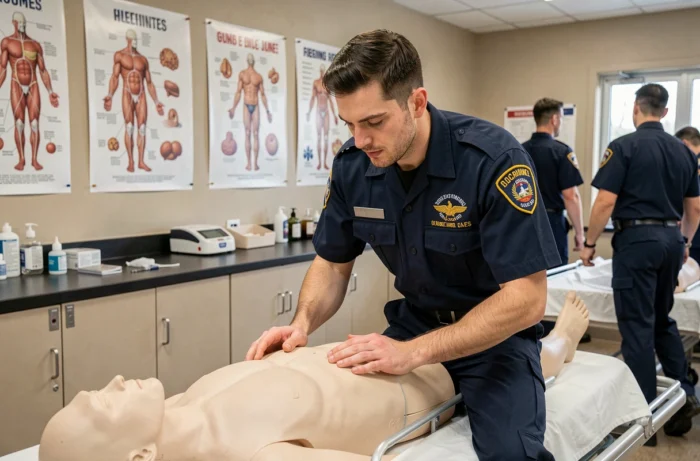
The training of paramedics in Belgium is based on two distinct pathways, each with its own regulatory requirements, hourly volumes, and career prospects. Confusing the two paths, AMU and non-urgent transport, is akin to comparing two different professions that share a vehicle.
Approval and regulatory framework: what conditions access to the field
Even before entering training, the issue of approval determines the entire pathway. The paramedic for non-urgent patient transport (ATNUP) is part of a paramedical profession recognized by the Federation Wallonia-Brussels. Obtaining approval involves submitting a request to the Health Approval service, after validation of the diploma or training certificate.
For the paramedic active in emergency medical assistance (AMU), the framework is different. The conditions of practice depend on the rescue zones and the SPF Public Health. A recent royal decree has strengthened the requirements imposed on AMU ambulance services, particularly regarding service organization, quality, and supervision. These changes have a direct impact on the profiles recruited and the content of the training.
We observe that this regulatory distinction remains poorly understood by candidates. Many enroll in an ATNUP training thinking they will access emergency missions, which is not the case without additional qualifications.
To delve deeper into paramedic training in Belgium, it is essential to first identify the targeted pathway before choosing a training organization.
AMU Training: hourly volume, internships, and technical content
The training for paramedics in rescue services (AMU) consists of approximately 180 hours of theoretical and practical courses, in addition to internship hours, the volume of which varies according to training centers and rescue zones.
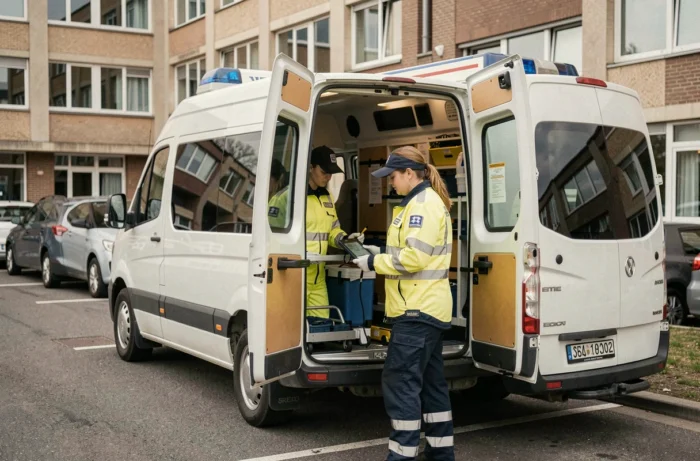
The program covers advanced first aid techniques, cardiopulmonary resuscitation, immobilization, oxygen therapy, as well as managing life-threatening emergency situations. The level of training does not correspond to that of a paramedic as found in other countries. The Belgian AMU paramedic is not a paramedic in the North American sense of the term.
Internships take place in ambulances, within a rescue zone or an approved service. Validation of the internship is a prerequisite for accessing the field. Without this validation, the candidate cannot practice, even if they have passed the theoretical part.
Entry requirements and required profile
No federal fitness certificate is required to become a paramedic in a rescue zone, unlike firefighters. Recruitment is decided by the zone council, generally once a year, based on the staffing plan.
- Be of legal age and possess a clean criminal record extract (model adapted to the position)
- Pass the selection tests specific to the rescue zone (physical test, interview, written exam according to the zones)
- Obtain a medical certificate of physical fitness compatible with carrying loads and working under stress
- Complete and validate the entire theoretical, practical training, and internships
Some zones recruit volunteer paramedics, while others recruit professional (salaried) paramedics. The status affects the volume of services, remuneration, and continuing education obligations.
ATNUP Paramedic: a paramedical pathway in critical shortage
The ATNUP training prepares for the non-urgent medical transport of patients who do not require emergency medical assistance. This includes inter-hospital transfers, trips to specialized consultations, or the transport of patients with reduced mobility requiring medical supervision.
IFAPME classifies ATNUP training among the critical professions for the year 2025-2026 in Wallonia. This structural shortage reflects a real need for qualified personnel and offers very favorable opportunities for graduates.
Content and validation of the ATNUP curriculum
The curriculum covers basic care, patient handling, hygiene, communication with patients and families, as well as administrative management of transport. The training also includes a component on basic maintenance of the medical vehicle and inventory management of equipment.
After obtaining the certificate, the candidate submits a request for approval to the competent service of the Federation Wallonia-Brussels. Without approval, practicing the profession is illegal.
Career opportunities and developments in the Belgian ambulance sector
Prospects vary depending on the chosen pathway. The AMU paramedic primarily works within rescue zones, either as a volunteer or professional. Some combine this activity with a firefighter position, as both functions coexist in fire stations.
The ATNUP paramedic works in private medical transport companies, hospitals, or care structures. Recognition as a critical profession means that job offers exceed the number of trained candidates, a situation that is expected to continue in the coming years.
- Rescue zone (AMU): volunteer or professional positions, possibility to combine with the firefighter profession
- Private medical transport (ATNUP): approved companies, working in teams of two paramedics
- Hospital environment: stretcher-bearer with paramedic qualification, internal and external transfers
- Military sector: the Belgian Defense recruits first-aid paramedics with a specific training pathway
Continuing education remains mandatory in both pathways. Periodic refreshers focus on technical gestures, updated protocols, and new regulations. A paramedic who does not undergo refresher training loses their right to practice.
The profession is rapidly structuring in Belgium, with strengthened regulations and standardization of training. For candidates motivated by the health and rescue sector, both pathways offer accessible yet demanding routes. The choice between AMU and ATNUP should be made in advance, as the bridges between the two remain limited.