
Community platforms dedicated to pets are becoming more specialized. After years of general Facebook groups and hashtags lost in the flow, a new generation of online spaces exclusively targets cat enthusiasts, incorporating mechanics borrowed from video games and themed social networks.
Cat mapping and short videos: the mechanics that structure new cat platforms
The classic community model (forum, photo gallery, discussion thread) is no longer sufficient to retain an audience. Recent platforms now integrate cat geolocation features, inspired by the principle of interactive maps.
The StrayKitty app, updated in August 2026, for example, offers a “Cat Map” that allows users to locate neighborhood cats and share georeferenced anecdotes. This type of mechanic transforms the simple observation of a stray cat into a community contribution.
The other lever is 30-second short videos, a format modeled after TikTok but refocused on felines. StrayKitty added this feature in 2026 to capture spontaneous moments of daily life with a cat. The short format encourages engagement without requiring editing skills.
These two mechanics (map and short video) create a usage loop: you explore the map, discover a cat reported by another member, and film yours in response. This type of playful dynamic is what we find on the site aplouf com for cats, which focuses on games and interaction among enthusiasts rather than simple passive browsing.
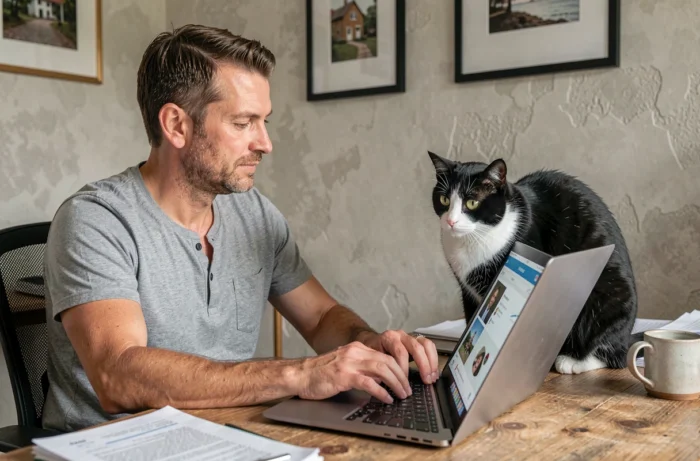
Cat community platform: what distinguishes a niche network from a generalist group
A Facebook group dedicated to cats and a vertical social network do not meet the same needs. The former aggregates content in an algorithmic feed that no one controls. The latter structures the experience around features designed for the subject.
We observe several markers of differentiation on specialized platforms:
- A thematic community feed that accepts neighborhood cats, not just pets registered by their owners, which broadens the content base and attracts lovers of stray cats
- Collection or badge systems that reward regular contributions, borrowed from mobile games
- Targeted moderation focused on animal welfare, with clear rules on the type of content accepted (no stressful staging for the animal, no promotion of impulsive kitten purchases)
- Dedicated support spaces for feline behavior, nutrition, and care, separate from the entertainment feed
This segmentation between playful content and useful content is sorely lacking in generalist groups, where a veterinary advice post gets lost between two memes.
Online games for cat enthusiasts: beyond simple quizzes
The playful dimension is not limited to posting cute photos. The most advanced platforms introduce mechanics of rarity and digital collection that extend engagement.
CatchCat, launched in June 2026, exemplifies this trend. The app detects a real cat via the smartphone camera, assigns it an approximate breed, and transforms it into a 3D figurine integrated into a personal collection. The system also works with photos already stored in the gallery, allowing users to “catch up” on past encounters.
This principle of gamification applied to pets is not a gimmick. It creates a recurring excuse to open the app, interact with other collectors, and share findings. For cat enthusiasts, motivation comes from both play and community.

Data privacy and local image processing
A technical point often overlooked in the pet sector: local processing of photos on the phone rather than on a remote server. CatchCat advocates this approach, meaning that images of cats (and potentially their environment) do not pass through third-party servers.
For a community platform that collects geolocations and daily photos, this architecture has a direct impact on user trust. We recommend checking this point before investing in any niche network.
Adoption and animal welfare: the role of cat community platforms
Vertical networks for cats do not only serve entertainment. Some integrate features aimed at fostering foster placements or connecting with associations.
Kiweeto, for example, has developed an app specifically designed to facilitate the placement of animals in foster homes. The tool was born from the field experience of volunteer associations, not from a disconnected research office.
This intersection of playful dimension and concrete utility for cat welfare represents the most relevant evolution in the sector. A platform that generates engagement without contributing to animal welfare misses its target. Cat owners and feline lovers now expect both.
European regulations on the welfare of dogs and cats are also evolving in this direction, with new requirements being discussed in the European Parliament. Platforms that integrate content raising awareness about feline behavior, care, or responsible adoption are positioning themselves on a more sustainable ground than those that rely solely on entertainment.
The market for community platforms for cats is rapidly segmenting between purely recreational tools and hybrid spaces combining games, support, and commitment to animal causes. The most engaged cat enthusiasts are already migrating to these second platforms, those that respect both their desire to play and their attachment to the well-being of their feline companions.